EU Trademark Fees 2026: From €290 – What You Really Pay
Myth busted: Trademark office fees do not change in 2026. Real EUIPO and DPMA costs from 290 euros, plus a 75 percent rebate via the SME Fund.

Founder & Developer of markencheck.ai
June 26, 2026 · 8 min read · Updated August 3, 2026
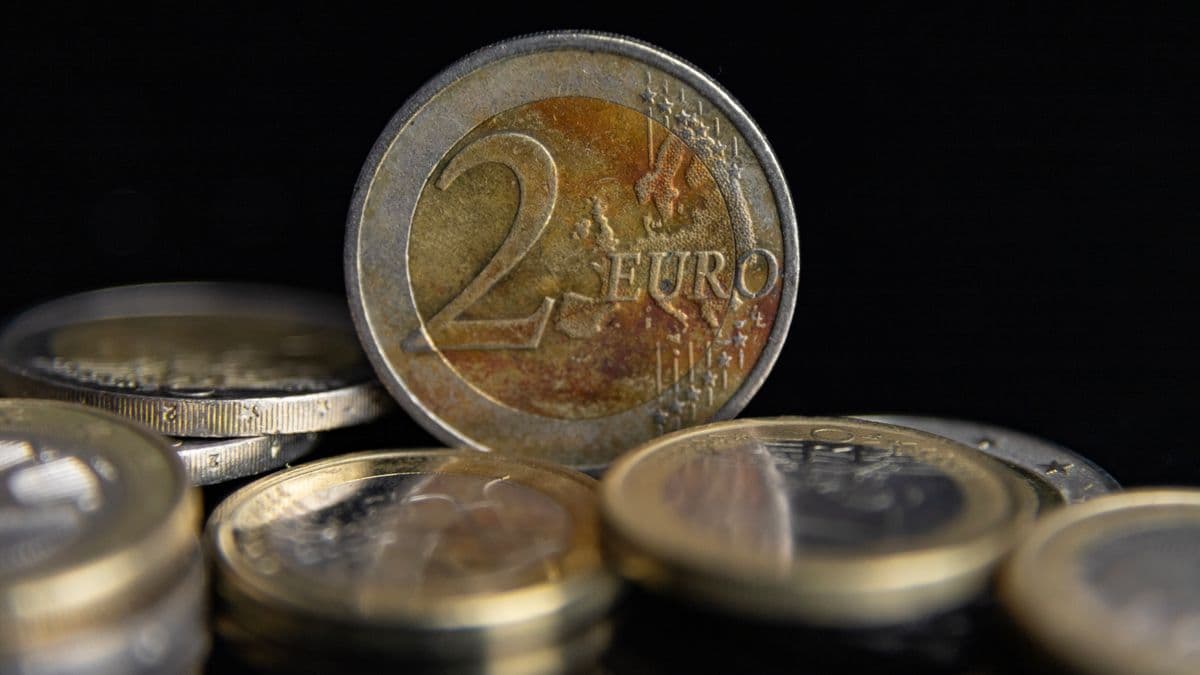
If you google "trademark fees 2026," you probably expect a reform with new prices. Here is the honest answer first: trademark office fees do not change in 2026. At the DPMA (2026), electronic filing still costs 290 euros, and at the EUIPO (2026) the EU trademark starts at 850 euros. What is actually being reformed in 2026 affects designs and registered designs, not trademarks. This mix-up leads to wrong budget assumptions and needless uncertainty. In this guide, I separate myth from fact, walk you through the real DPMA and EUIPO costs, and explain how the SME Fund gets you up to 75 percent of the application fee back. (Not legal advice, just practical know-how.)
Key Takeaways
- Trademark office fees stay unchanged in 2026, and there is no fee reform for trademarks.
- A DPMA application costs 290 euros electronically for up to three classes (DPMA, 2026).
- The EUIPO basic fee is 850 euros for one class via e-filing (EUIPO, 2026).
- The 2026 reform affects only designs (Reg (EU) 2024/2822), not trademarks.
- The EU SME Fund reimburses 75 percent of the application fee, up to a maximum of 700 euros.
Before you plan your budget, it pays to look at the full cost picture. Our overview of trademark search costs covers the items that come on top of the bare office fees.
Do trademark fees really change in 2026?
No, trademark fees do not change in 2026. At both the DPMA and the EUIPO, the office fees for filing, opposition, and renewal stay unchanged (DPMA/EUIPO, 2026). There is no adopted trademark fee reform for this year. The impression of a reform comes from a mix-up with design law.
The search volume around "trademark fees 2026" creates the impression that something must be happening. In reality, the reason lies elsewhere. A major reform does take effect in 2026, but it concerns designs, that is, registered designs. Regulation (EU) 2024/2822 is being implemented in two phases, with phase two taking effect on 1 July 2026 (EUIPO, 2026). Trademarks are not affected by it.
Why does this distinction matter so much? Mixing up design and trademark protection means planning with the wrong figures. Design fees and trademark fees follow separate tables, and only one of them is being touched right now.
There is no 2026 update to trademark office fees. What is being reformed are registered designs under Regulation (EU) 2024/2822, whose second phase applies from 1 July 2026. This change cannot be transferred to trademark applications, so trademark fees stay the same.
For your planning, that means you can rely on the familiar amounts. If you file this year, you calculate with the same fees as before.
What does a DPMA trademark application cost in 2026?
A national trademark application at the DPMA costs 290 euros electronically or 300 euros on paper, each covering up to three Nice classes (DPMA, 2026). Nice classes are the categories of goods and services in which your trademark enjoys protection. Each additional class beyond the third costs an extra 100 euros. For a step-by-step walkthrough of the filing process via DPMAdirektWeb, see the guide Filing a Trademark with the DPMA.
Renewal after ten years is considerably more expensive than the initial filing. At the DPMA (2026), it is 750 euros for up to three classes, plus 260 euros per additional class. These amounts stay the same in 2026. Many founders overlook renewal in their initial budget and so underestimate the lifetime cost of their trademark.
DPMA fees at a glance
- Electronic filing: 290 euros for up to three classes
- Paper filing: 300 euros for up to three classes
- Each additional class: 100 euros
- Renewal: 750 euros for up to three classes, plus 260 euros per additional class
A national trademark covers Germany only. That is enough if your market is purely German. As soon as you sell across Europe or want to scale, the EU trademark comes into play. How the fees and scope of protection of the two offices differ in detail is laid out in EUIPO vs DPMA. Our guide to trademark research before filing shows which search makes sense before either route.
What does an EU trademark cost at the EUIPO in 2026?
The EU trademark at the EUIPO has a basic fee of 850 euros for one class via e-filing, or 1,000 euros on paper (EUIPO, 2026). It protects your trademark in all EU member states at once. The second class costs an extra 50 euros, and each additional class 150 euros. All amounts are set out in Annex I of Regulation (EU) 2017/1001 and apply unchanged.
Besides the application, there are other relevant fees you should know about. An opposition (a challenge by the owner of an earlier trademark) costs 320 euros. A revocation or invalidity request comes to 630 euros, and an appeal to 720 euros (EUIPO, 2026). These items mainly affect you if a conflict arises.
EUIPO fees at a glance
- Basic fee, e-filing: 850 euros for one class
- Basic fee, paper: 1,000 euros for one class
- Second class: 50 euros
- Each additional class: 150 euros
- Opposition: 320 euros
- Revocation or invalidity request: 630 euros
- Appeal: 720 euros
An observation from practice: at the EUIPO, the jump from one to two classes is almost free at 50 euros, while two to three is noticeably more expensive at 150 euros. So if you want broad protection, plan your classes deliberately rather than by gut feel. You can put this logic to work right away when you check your trademark and match it against the right classes.
How do you save on trademark fees in 2026?
You save through the EU SME Fund, which reimburses 75 percent of trademark application fees, up to a maximum of 700 euros (EUIPO, 2026). The fund is aimed at small and medium-sized enterprises in the EU. The key thing to understand: this is a rebate, not a reduced office fee. You pay the full amount first and get the share back afterward.
The process follows a fixed order. First you apply for a voucher through the EUIPO, and only then do you file your trademark and submit the reimbursement. Anyone who goes about it in the wrong order loses the entitlement. For an EUIPO application with one class at 850 euros, the reimbursement means up to 637.50 euros back, a substantial share.
The SME Fund does not lower the office fee itself. It reimburses 75 percent of the application fees paid afterward, up to 700 euros per application (EUIPO, 2026). You have to apply for the voucher before filing, otherwise the funding is forfeited. You only get money back in this order.
You will find the details on the application, deadlines, and requirements in our article on the EU SME Fund for trademarks 2026. The fund is worthwhile for almost every first filing, since the effort stays manageable.
What do these costs mean for your planning?
Plan with the full office fees and treat the rebate as a bonus, not a basis. A DPMA application starts at 290 euros, an EU trademark at 850 euros (DPMA/EUIPO, 2026). On top of that often come research and, where needed, advisory costs. What a lawyer typically charges for a filing is broken down with concrete numbers in our comparison file a trademark yourself or with a lawyer. Anyone who counts only the application fee regularly underestimates the real budget.
The most expensive item appears on no fee table: a conflict with an earlier trademark. An opposition costs the other side 320 euros at the EUIPO, but costs you effort, possible legal fees, and in the worst case your registration (EUIPO, 2026). A clean upfront search is therefore almost always cheaper than the risk of filing blind.
A rule of thumb from practice: the search before filing costs a fraction of what a lost opposition or a forced rebrand swallows. This is exactly where the underestimated lever sits. You do not control the office fee, but you do control the risk behind it. You will find the full cost framework in our overview of trademark search costs.
Common questions about trademark fees in 2026
Even though the fees stay stable, the same questions keep coming up around trademark filing in 2026. You will find the most important answers in the FAQ block of this article, from the supposed reform to the EUIPO costs to the funding via the SME Fund.
If you are unsure about classes, similarity, or conflict risk, start with research before you pay any fees. For genuine borderline cases or ongoing conflicts, legal advice makes sense, because this article does not replace legal counsel.
Conclusion: stable fees, predictable budget
The most important message first: trademark fees do not change in 2026. Anyone who suspected a reform is confusing trademarks with designs, since only design law is currently being reformed (EUIPO, 2026). For you, that means planning certainty. A DPMA application starts at 290 euros, an EU trademark at 850 euros, both unchanged.
Your biggest lever is not the fee itself, but what comes before and after it: the research that avoids conflicts, and the SME Fund that brings back 75 percent. Use both, and your trademark is well protected and cheaply financed. The first step is always the same: check before you file. You can check your trademark right now and play it safe.
Sources
- EUIPO – Fees and payments (2026)
- EUR-Lex – Regulation (EU) 2017/1001 on the European Union trade mark (2017)
- EUR-Lex – Regulation (EU) 2024/2822 amending the Community designs Regulation (2024)
- DPMA – Fees for trade mark rights (2026)
Frequently asked questions
Are trademark fees going up in 2026?
No. Trademark office fees stay unchanged in 2026. At the DPMA (2026), electronic filing costs 290 euros for up to three classes, and at the EUIPO (2026) the basic fee is 850 euros for one class via e-filing. There is no trademark reform for 2026.
So what actually changes in 2026?
The reform affects designs, not trademarks. Under Regulation (EU) 2024/2822, the protection of registered designs changes, with phase two taking effect on 1 July 2026 (EUIPO, 2026). This does not carry over to trademarks. Trademark fees and trademark procedures remain untouched.
What does an EU trademark cost at the EUIPO in 2026?
The basic fee is 850 euros for one class via e-filing (EUIPO, 2026). The second class costs an extra 50 euros, and each additional class 150 euros. These amounts are set out in Annex I of Regulation (EU) 2017/1001 and apply unchanged in 2026.
How do I save on trademark fees?
Through the EU SME Fund. It reimburses 75 percent of trademark application fees, up to a maximum of 700 euros (EUIPO, 2026). This is a rebate, not a lower office fee: you pay the full amount first and get the share back afterward, provided your application is approved.
What does it cost to renew a trademark?
At the DPMA (2026), renewal costs 750 euros for up to three classes, plus 260 euros per additional class. It falls due after ten years. Renewal fees are also unchanged in 2026, and there is no announced increase for trademarks.
Founder & Developer of markencheck.ai
Founder & Developer of markencheck.ai. Focus: data-driven, AI-assisted trademark research and EUIPO register data. Not a lawyer — markencheck.ai is a technical research tool and no substitute for legal advice.
Featured in

Ready to research your trademark? Research your trademark now →
More articles


Research your trademark before you file
Find similar marks in seconds — with AI score, phonetic and class matching.
Start a search